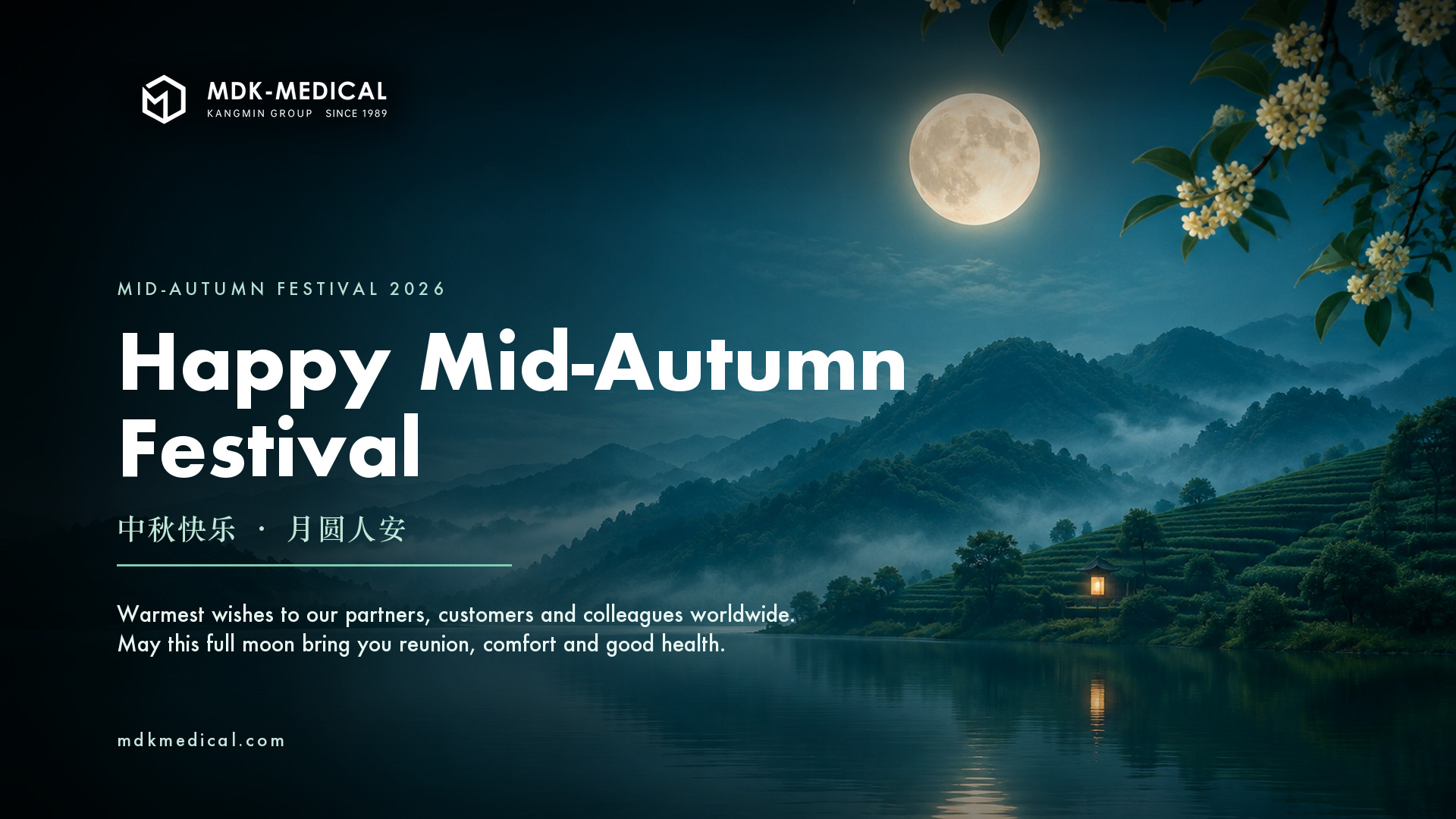
Mid-Autumn Festival 2026 falls on September 25, when families gather for reunion meals, tea and mooncakes. For people living with a stoma or a healing wound, the holiday raises two practical questions: how to enjoy a festive meal comfortably, and how to keep routines steady while travelling.
Mid-Autumn Festival falls on the fifteenth day of the eighth lunar month. In 2026 it is September 25, and the public holiday in China runs from September 25 to 27.
It is a festival of reunion. Families travel, share a longer and richer meal than usual, drink tea, and cut mooncakes into pieces so that everyone at the table receives a portion.
For people managing a stoma or a wound, none of that has to be out of reach. A little planning usually makes the difference between a day you get through and a day you enjoy.
Table of Contents
Mid-Autumn Festival 2026 and the Reunion Table
Festival meals are different from everyday meals. They are richer, often saltier or sweeter, and they are served over a much longer period. People eat more slowly, go back for more, and stay at the table for hours.
That slower pace is actually helpful. The main challenges are not the length of the meal but the quantity, the richness of the food, and the change in routine around it.
Eating Comfortably at a Shared Meal
- Eat slowly and chew thoroughly. Hurried eating is one of the most common causes of discomfort.
- Take a smaller portion first and go back for more. Several small servings are easier to manage than one large plate.
- Introduce unfamiliar dishes in small amounts, so you can see how you tolerate them.
- Keep the meal roughly in the pattern your body is used to. Large changes in timing and quantity are often harder to adjust to than changes in menu.
- If a food has caused problems for you before, this is not the day to test it again.
- Keep drinking through the meal rather than only afterwards.
Every stoma is different. The guidance that matters most is the guidance from your own stoma care nurse or clinician.
Mooncakes and Rich Foods
Mooncakes are dense. They are typically high in fat and sugar, and fillings often include lotus seed paste, nuts, seeds or salted egg yolk.
They are also eaten in small portions - a single mooncake is usually cut into several pieces and shared - which makes them easier to handle than they first appear. A few points are worth keeping in mind:
- Start with a small piece and see how it sits before taking more.
- Chewing well matters even more with dense food than with any other kind.
- Rich, high-fat or high-sugar foods can be harder to digest for some people, particularly those with an ileostomy.
- Nuts, seeds and dried fruit used in some fillings can be more difficult for some people. If you already know they are a problem for you, choose a plainer option.
- If you follow a specific dietary plan, check with your dietitian or stoma care nurse before adding festival foods.
Hydration and Alcohol During the Holiday
Long meals, warmer weather in many regions and more time spent travelling all increase fluid needs.
- Keep drinking water steadily through the day, not only at the meal.
- Pay attention to your usual signs and act early if something feels different. Ask your healthcare team what to watch for in your own case.
- Alcohol can increase fluid loss and may affect how you feel. If you drink, keep it modest, alternate with water, and see how you respond.
- Very hot or very cold drinks in large amounts can be uncomfortable for some people.
Wound Care and Skin Protection While Travelling
Travel and long days outside your normal routine are the two things most likely to disturb a pouch or dressing routine.
- Change pouches and dressings on your normal schedule rather than waiting for a convenient moment.
- Keep the skin around a stoma clean and dry, and follow your usual skin protection routine.
- If a dressing lifts or a pouch seal loosens, replace it rather than patching it.
- Choose clothing and seating that do not press on a stoma or a healing wound during long journeys.
- Wash hands before and after any pouch or dressing change.
Packing a Holiday Care Kit
Pack more than you think you need, and keep it in the bag you carry with you:
- Spare pouches, skin barriers and any accessories you normally use - at least twice your usual daily quantity
- Spare dressings for wound care, plus tape or fixation if you use it
- Adhesive remover and skin protection products
- Disposal bags for used supplies
- Any prescribed or regularly used medication
- A short written summary of your routine, and contact details for your care team
If you are flying, check the current rules of your airline and departure airport for medical supplies and for any cutting tools you use. Requirements vary and change.
A Note on Professional Advice
This article provides general information for the holiday period. It is not medical advice and does not replace the guidance of your stoma care nurse, wound care clinician, dietitian or physician.
If you have concerns about your stoma, your wound, your diet or your medication during the holiday, contact your healthcare team - particularly if you notice bleeding, a change in output, increasing pain, fever, or signs of dehydration.
FAQ
When is Mid-Autumn Festival 2026?
September 25, 2026 - the fifteenth day of the eighth lunar month. In China, the public holiday runs from September 25 to 27.
Can people with a stoma eat mooncake?
Many people can enjoy a small portion of mooncake. It is dense and high in fat and sugar, so start small, chew well, and see how you tolerate it. If you are unsure or you follow a specific diet, check with your stoma care nurse or dietitian.
Why does chewing matter so much?
Chewing thoroughly makes food easier to digest. This is general guidance; your care team can advise on what is appropriate for your own situation.
Is it possible to travel during the holiday?
Many people travel with a stoma or a healing wound. Planning ahead - spare supplies, a care kit, steady hydration and planned change times - makes it more comfortable. Discuss travel plans with your healthcare team if you have concerns.
What should be in a holiday care kit?
Spare pouches and barriers, dressings, adhesive remover, disposal bags, medication, and your care team's contact details. Pack at least twice your usual daily quantity.
Conclusion
Mid-Autumn is about reunion and completeness. With a little planning - eating slowly, drinking steadily, keeping to your routine, and carrying spare supplies - the holiday can be enjoyed on your own terms.
Whichever table you sit at this year, we wish you a comfortable, healthy and happy festival.
From the MDK Medical team: 中秋快乐 - Happy Mid-Autumn Festival.


